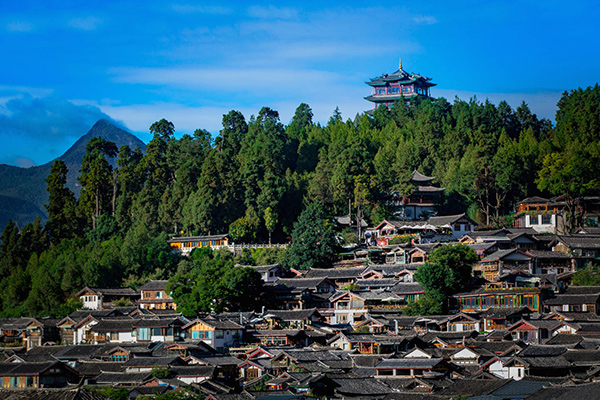
Old Town of Lijiang
Overview
The Old Town of Lijiang, located in the Lijiang Basin at an elevation of 2,400 meters in southwest Yunnan province, China, is a remarkable example of a well-preserved cultural site. It represents one of the last surviving ancient towns in China, characterized by a historic townscape of high quality and authenticity. The town is renowned for its architectural integration of elements from various cultures and a sophisticated water-supply system that continues to function efficiently. Nestled within the embrace of the Jade Dragon Snow Mountain (also known as Yulong Snow Mountain), the old town is nourished by the rivers and springs that provide water to its intricate network of canals. This ancient town consists of three main parts: Dayan Old Town, established as a commercial center during the Ming Dynasty (1368-1644), the Baisha Old Town from the Song (960-1279) and Yuan (1271-1368) dynasties, and the Shuhe Old Town situated 4 km northwest of Dayan Old Town. These settlements reflect a blend of local cultures, folk customs, and traditions that have evolved over centuries, harmoniously coexisting with nature and showcasing ingenious architecture and urban facilities. They were designated as a UNESCO World Heritage Site in December 1997.
Historical Background
The rich history of the Old Town of Lijiang dates back to the Tang Dynasty (618-907), and in 12th century, it became an essential hub for trade between Sichuan, Yunnan, and Tibet, serving as a convergence point for the Silk Road in the south and the Ancient Tea and Horse Roads. The town played a pivotal role in facilitating economic and cultural exchanges among various ethnic groups, including the Naxi, Han, Tibetan, and Bai peoples. During the Yuan Dynasty (1271-1368), Lijiang was officially designated as a town. Under the rule of the Mu clan, the Naxi people of Lijiang developed a unique social system, customs, and culture. In the 18th century, during the Qing Dynasty (1644-1911), a policy of cultural interaction led to the Naxi people adopting customs from the Tibetan and Han ethnicities. Despite several destructive earthquakes, Lijiang has retained much of its original structure due to careful renovation efforts.
Cultural Heritage
Music
Music is an integral aspect of Lijiang's cultural heritage, with traditional ensembles thriving across the region. The Baihua and Dayan Troupe are among the most renowned groups, performing traditional music with a deep-rooted history. The musicians, often elderly, are skilled in both music and storytelling, serving as custodians of the ancient culture of the Naxi people. One of the most celebrated musical compositions is the Baisha Music Suite, also known as Bieshixieli or Beishixili, which seamlessly combines singing, dancing, and instrumental music. Additionally, the Taoist Scripture Music retains traditional rhythms and melodies, although the classical verse forms from central China have been lost over time. Dance music also enjoys popularity in Lijiang, further enriching its vibrant musical landscape.
Murals
The murals of Lijiang are an integral part of its cultural legacy, found both in the town and in the 15 temples that surround it. Dating back to the Ming and Qing periods, these murals depict religious themes, illustrating a harmonious blend of Confucianism, Taoism, and Buddhism. Notably, a large mural in the Dabaoji Palace in Baisha Village features a hundred deities and figures from Han Buddhism, Tibetan Buddhism, and Taoism, illustrating the cultural synthesis that characterizes the region.
Dongba Script and Language
The Dongba script and language are unique cultural features of Lijiang, having been preserved and passed down through generations. Known as the "Encyclopedia of the Naxi ethnic group," the Dongba scriptures consist of more than 20,000 volumes that record the Naxi people's history and culture. Among these is the Cuomo, which details stories, dance steps, costumes, stage props, and musical instruments for several Dongba classical dances. The Dongba language is the world's only remaining living language that employs hieroglyphics, serving as the primary vehicle for the traditional culture of the Naxi people.
Architecture
The architectural landscape of Lijiang is distinguished by its fusion of various ethnic influences, covering an area of 7.279 square kilometers and comprising over 4,200 households. The town, also known as Dayan, is laid out in the form of a traditional Chinese ink stone. Square Street serves as the central thoroughfare, with houses constructed from stone and wood that reflect the architectural styles of the Han, Bai, and Tibetan ethnic groups, alongside the Naxi. A typical two-story house features a row of three main rooms on the ground floor facing south, flanked by side rooms that form a front courtyard concealed from public view by a wall. The houses are adorned with exquisite carvings and fish-shaped boards known as "suspended fish," which are symbolic of auspiciousness and wealth. The courtyard, paved with pebbles, colored tiles, or bricks, often includes a flowerbed and a pool, creating a serene environment that integrates seamlessly with the natural surroundings.
Travel
Travel to the Old Town of Lijiang offers a journey into a world of historical and cultural richness. The town, with its picturesque setting, provides an escape from the bustling megacities of China. Surrounded by pristine natural beauty and ancient architecture, visitors can explore the town's charming streets, stone bridges, and waterways that wind around the traditional houses. The town's reconstruction after the 1996 earthquake adhered meticulously to its original design, enhancing its appeal as a UNESCO World Heritage Site. Adventurous travelers can explore the Jade Dragon Snow Mountain, enjoy the "Impressions of Lijiang" performance by Zhang Yimou, or visit the Mu Residence, a historical Naxi ruler's residence. For a quieter experience, an early morning visit allows for a serene exploration before the crowds arrive, offering a deeper appreciation of Lijiang's cultural and architectural treasures.
Development and Challenges
In recent decades, Lijiang has evolved into a hub for tourism and cultural exploration. The local government's efforts to promote and preserve Naxi culture have led to the establishment of cultural experience centers, such as the one led by He Runyuan, which aim to educate visitors about Naxi scripts, history, and traditions. However, the influx of tourists has also posed challenges, leading to concerns about over-commercialization. To mitigate this, the local government has implemented measures to protect the area's cultural heritage, such as setting up a specialized annual fund for cultural preservation and ensuring that buildings maintain traditional characteristics. Yet, the delicate balance between development and cultural preservation continues to be an ongoing challenge for Lijiang.
Challenges and Preservation
Preserving the Old Town of Lijiang amid rapid development and commercialization remains a significant challenge. The local government and cultural custodians have taken active steps to safeguard the unique cultural attributes of Lijiang. Renovation and restoration projects have been undertaken to maintain traditional houses and courtyards. Additionally, the government supports cultural activities, invites folk artists to perform, and publishes books to promote Naxi culture.
Article reference1. Irresistible lightness of being. chinadaily.com.cn. 20232. Top tourist city strengthens cultural protection. chinadaily.com.cn. 20193. Old Town of Lijiang. chinadaily.com.cn. 20184. Old Town of Lijiang. chinaservicesinfo.com. 2018Photo Gallery(15 pictures)CategoriesCultural HeritageTagWorld HeritageCity TourismWorld Heritage in ChinaHistorical and Cultural Town and VillageRelatedChina Travel Guide: YunnanCatalogue1. Overview2. Historical Background3. Cultural Heritage4. Travel5. Development and Challenges6. Challenges and Preservation-
- []








